In whose image …
Editorial, The Rev’d Dr. Nicholas Henderson
Editor: Anglicanism.org

‘So God created humankind in his own image …’ Genesis 1 verse 27.
From the Christian reading of this extract from the first of the two accounts of creation the verse in Genesis has a contemporary feel. In a Christian interpretation the consequence of this identification of humans with God emerges as one of a torturous relationship; not least as depicted in the Old Testament, where God himself is not portrayed as being particularly likeable. To say the very least, according to the unfolding narrative, God today might be hauled before the International Criminal Court in the Hague for genocidal crimes!
This is mitigated in that through the lengthy accounts of the interaction between God and his creation as made in his own image, there is eventually redemption. Nowhere is this more evident in the understanding that Jesus himself as God incarnate enables the repairing of relationships through his own sacrifice.
A backwards look to Greek mythology has the Titan Prometheus defying his superior Zeus by creating humanity. He eventually steals fire and brings it to earth for which he is punished. In turn thousands of years later the Greek hero Heracles rescues him.
Or again from the other side of the world and an entirely different society the Australian aboriginal people and from the ‘time of dreaming’ come various accounts including that of the Sun Mother arriving on Earth. Where she walked plants grew, but conflicts arose when the things she created began arguing. Then the Sun Mother returned to Earth and created two children, the first people, the Morning Star, and the Moon.
One could go on as all civilisations have their own ideas about where they came from and they all end in conflict and struggle, before any resolution.
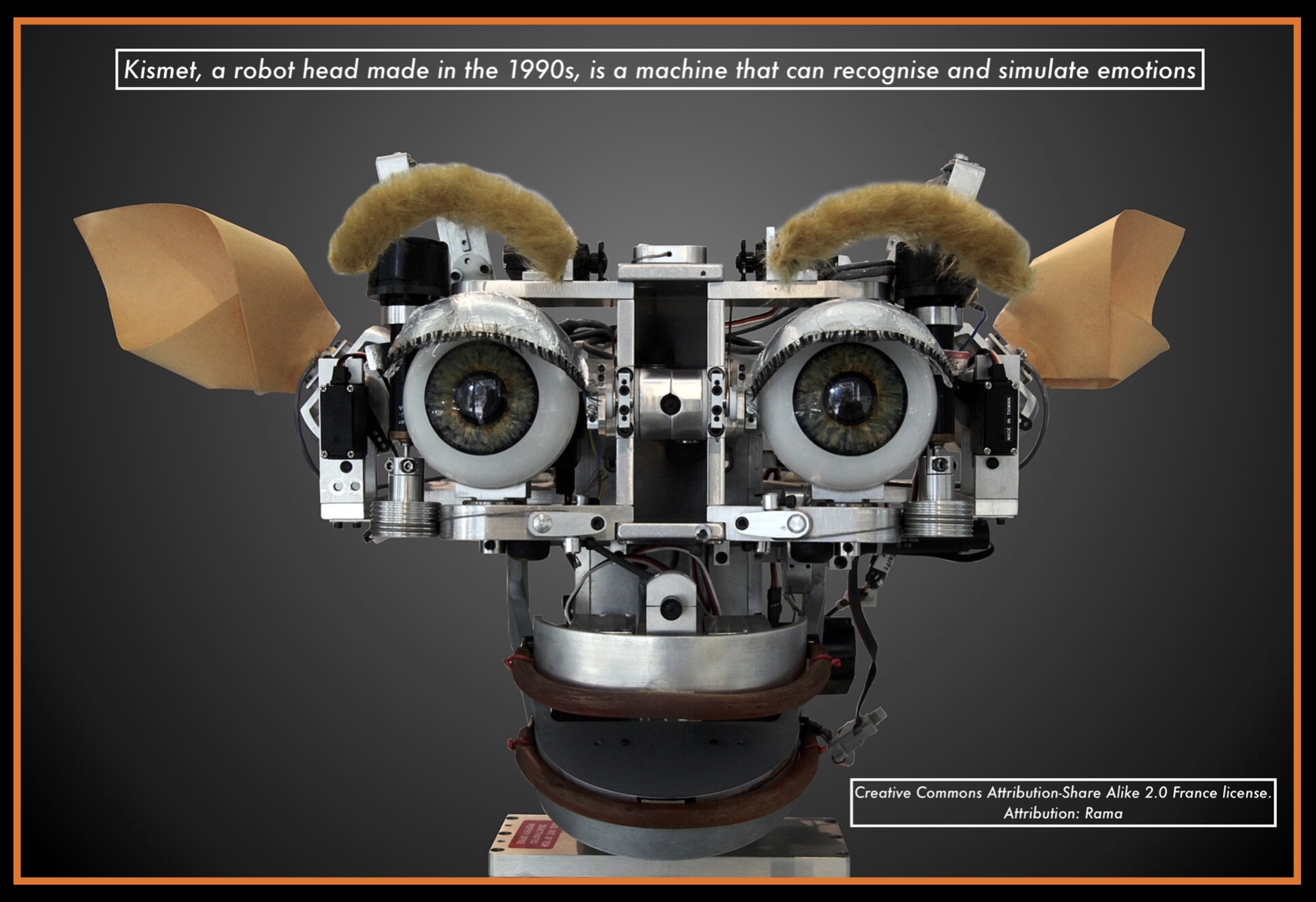
Suddenly and almost unexpectedly a new Promethium moment has emerged with the realisation in that what we currently call the increasingly sophisticated algorithms and computer programmes namely ‘Artificial Intelligence’ is taking on a life of its own. A second potential dystopian event after that of human-made Global Warming has emerged as AI is possibly now developing autonomously ‘recursive self-improvement’[i] and programmers and scientist are increasingly blind-sided as to what is actually going on. It is almost as if a new life form, with rapid access to the whole of human knowledge accrued over many generations, is emerging.
The only thing that is clear is that we made it and it is created in our own image. If this is the case it does not bode well, all the worst characteristics of our species are potentially coming to a computer, an infrastructure, a governance, pretty well anything in our societies. It is said that there is a fair chance that AI will ensure our destruction uninhibited by any moral compass.[ii]
It doesn’t take much imagination to join with what the science fiction writers have been telling us for decades. Forget the creation of super viruses, or unleashed nuclear bombs, just turn the power off for two or three days in any major city and watch permanent, unresolvable anarchy emerge. All of this from bacteria to bombing to blackout is apparently lurking close to the surface and imminent escape into the environment, released by a new type of electronic life based on the worst aspects of our own.
That being said, assuming that some kind of common sense, and co-operation emerges between nations and in giant AI conglomerates, the potential to tame and use AI for the good is enormous. However, it was the late Stephen Hawkings, respected analyst and physicist who noted that AI could indeed redesign itself, that human beings, limited by their biological evolution, couldn’t keep up. He clarified this later by pointing out that AI’s risk isn’t really malice but extreme competence, good at achieving its goals. However, if these goals don’t align humanity could be brushed aside like an anthill in the path of a hydro-project. AI is likely to be ‘either the best or worst thing ever to happen to humanity,’ Hawking said, ‘so there’s huge value in getting it right’[iii]
So, as latter-day Christians, whose relationship with our loving creator has been at best chequered over the millennia, what should we be doing about the emergence of a technology without any moral compass?
Thus far the Church has been pretty well silent on the matter. King Charles (ahead of the game as usual) will later this week be hosting the leaders of artificial intelligence companies including, amongst others, Nvidia, Google Deep Mind, Open AI, Anthropic and the UK minister for AI. The mood is that the pace of AI development should be slowed to assess the situation. Sadly, this worthy project doesn’t seem to have much trans-Atlantic or present-day Sino-Soviet political support.
What AI lacks, it seems, is an ethical underpinning to ensure its positive potential for the good of humankind. The Church should have a role in asserting this. The current actuality of silence or near-invisibility doesn’t help. As usual the bishops, although they are no doubt very busy, are absent – could it be that King Charles might have one or two of them at his meeting?
We’re used to taking our time but perhaps for once we should be alert and on our guard, as Jesus who is also human in God’s image warned us, “Therefore keep watch, because you do not know the day or the hour”[iv]
Nicholas Henderson
Editor: Anglicanism.org
Holy Cross Day, 14th September 2016
[i] Recursive self-improvement (RSI) is a hypothesised process in which artificial general intelligence (AGI) systems rewrite their own computer code, causing an intelligence explosion resulting from enhancing their own capabilities and intellectual capacity, theoretically resulting in superintelligence.
[ii] https://www.bbc.co.uk/news/articles/ckgwy1k42w4o
[iii] https://www.independent.co.uk/tech/stephen-hawking-artificial-intelligence-could-wipe-out-humanity-when-it-gets-too-clever-as-humans-could-become-like-ants-being-stepped-on-a6686496.html
[iv] Matthew 25 v 13