WARFARE OF THE SPIRIT
Paul Oestreicher reflects on his life with the Archangel Michael
This legend is no fantasy.
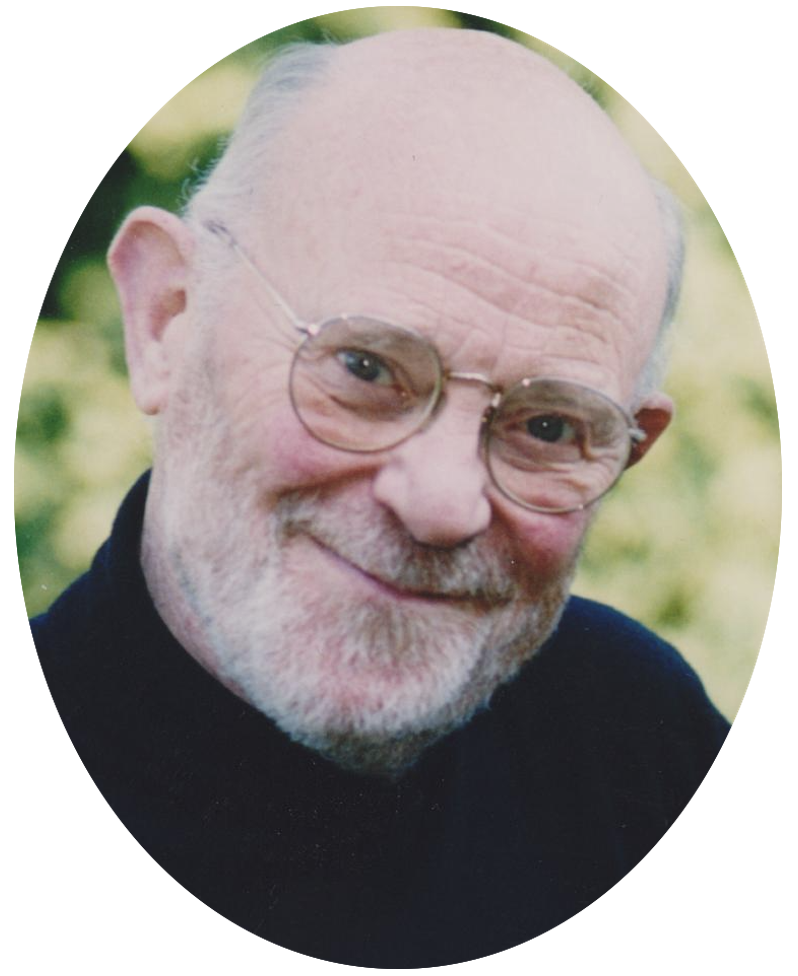
Canon Dr. Paul Oestreicher is an Anglican priest and Quaker political scientist, human rights activist, and peace campaigner, one-time Chair of Amnesty International UK, and still Vice-President of CND UK. He currently lives in Aotearoa New Zealand where he grew up as a refugee from Nazi Germany.
Even in Hell on Earth, there are glimpses of Heaven. A Catholic priest, no longer young in years, himself a prisoner, offered to take the place of a much younger Jewish prisoner who had three children and was heading for the gas chamber. That is not the normal way of the world. Having rid heaven of sin, it is the kind of world the Archangel Michael came to establish on earth. The concentration camp guards accepted the priest’s offer. The Jewish prisoner lived. Miracles happen.
My father was born to secular Jewish parents in 1896. Recruited in 1914 like all his school mates, and later a lieutenant in the Bavarian horse artillery, he survived the horrific battle of the Somme. He began to reflect on the meaning of life – and death. Medical study followed. As a young paediatrician, driving through the forest in deep snow, visiting a sick child, he heard a voice, stopped his little two-seater car: Paul, go and be baptised.
Years of reflection followed. My father was very close to his widowed mother, and eloped to marry my mother, a brilliant young singer. By the end of the 1920s, he followed the mysterious voice, took the plunge and was baptised in our dining room by one of the pastors of the Confessing Church. The official Lutheran Church would not baptise a Jew. After two miscarriages, I was born on Michaelmas 1931 to two Christian parents, a crucifix over my cot. Who was that, hanging there?
It was a bad time to be born. The world depression was at its height. Hitler had won the local election. Two years later he ruled the nation. My mother was no longer allowed to sing in public. She had married a Jew, considered a pollution of the German race. The only redeeming fact seemed to be my Michaelmas birth. I would learn one day what that might mean.
Hard years followed. By Easter 1938 I was, as a mischling, a half Jew, even admitted to school. Four months later, school was over. I wondered why. We had to flee, to go underground like many Jews. Most of them failed to survive the Holocaust.
A series of what felt like miracles made a new life possible. By May 1939 my parents and I, then aged seven, arrived as German-Jewish refugees in New Zealand’s capital city. It was my adventure of a lifetime, at sea in four different ships. Today there are still far too many such stories of fleeing people. The world is very slow to learn.
By September, New Zealand was at war with Hitler’s Germany. My mezzo-soprano mother, who had been welcomed by Dunedin’s musical world, was once again stopped from singing publicly. We were now enemy aliens. Some thought we might even be spies. Never mind. I was a happy Kiwi schoolboy, learnt English in no time, made friends quickly.
A young Christian from birth, I was baptised at eight months on my father’s thirty-fourth birthday. He told me much later how lucky I was, born on Michaelmas, to have an archangel to protect me. Michael must surely be a special friend of Jesus. This legend is no fantasy.
Looking for a meaningful faith, my parents discovered the Quakers – and joined them. They were the only community in our city that said no to war and made a point of befriending enemy aliens. Their silent worship made good sense. So, I became a Young Friend. A Sunday hour in silence was a challenge. To requalify, my dad was back at university for three years. Only then could he work again as a doctor. Tough years, but my mother saw us through. A village girl, she had all the practical skills.
By 1942, we were able to buy our first home. The property agent brought along his daughter, Louise. She and I were both eleven. Louise soon became my best friend – not girlfriend: Louise was gay. It was friendship for life. Eighty-one years later I was back to preside at Louise’s funeral.
On the eve of Michaelmas 1950, Louise and I were riding our bikes around Dunedin’s beautiful harbour. Sooner than usual, Louise said, ‘I need to make for home. Tomorrow is my church’s patronal festival, so its early church for me.’ She had quite forgotten it would be my nineteenth birthday. ‘Can I come too?’ I asked.
Next morning, we were both at St Michael-and-all-Angels, a beautiful, modest Anglican church in the back streets of Andersons Bay. I had never been to an Anglican eucharist. That experience blew this young Quaker away. It was a mystical, transforming event, akin to my father’s mysterious call to be baptised. All my instincts told me that the Archangel must have been waiting for me.
I never looked back. Within two weeks I was knocking on the university chaplaincy’s door, asking to be prepared for confirmation. Father Charles remained a formative influence, though we often differed. He rejected my pacifism and made a strong ethical case for, in the war years, putting his priesthood on hold to do what others had to. He became a successful fighter pilot. ‘War is sinful, why should I exempt myself? We all need forgiveness.’ I understood that, but, at nineteen, I formally put my conscientious objection to military service on record.
A few weeks before his death, Father Charles confessed to me that he had not told me the whole truth. ‘My love of flying, I must admit, was part of this not entirely high-minded decision.’ This was an all-too-common case of mixed human motives.
After three months, I was asking to be accepted for training for the priesthood. No contradiction in remaining a Quaker at heart. All the while, my pilgrimage with my Archangel also had the blessing of my New Zealand bishop.
Move on a decade to St Paul’s Cathedral in London. In 1959 I was ordained to the diaconate on the Feast of St Michael. Exactly a year later, same place, again on Michaelmas, priesthood followed. The bishop of London had insisted that the ordination should take place on the feast itself. That is not necessarily so. What’s in a day? Quite a lot really.
Still in safe extra-terrestrial hands, years followed as a BBC religious features – close-to-the-edge – producer and many more years as the British Council of Churches’ envoy to the Christians behind the Iron Curtain, a world of costly witness. My political studies stood me in good stead. Then a decade as a parish priest, prominently sharing in the campaign for the ordination of women. At my suggestion, the name Movement for the Ordination of Women (MOW) was adopted to replace the Campaign for the Ordination of Women (COW)!
My Archangel remained quietly essential through many hardships. Our adopted son took his own life at nineteen and my wife died of a rare neurological illness. The family was not left alone. At his request, I buried our son’s ashes in the sands of the Egyptian desert. He had chosen his new abode.
When I was reluctantly persuaded to accept election to the bishopric of Wellington, that election was then fortunately vetoed by conservative powers. I was sent, now in search of a new task, to head the International Centre for Reconciliation at St Michael’s Cathedral, Coventry. It is there that I came to know Michael in a new enlightened form.
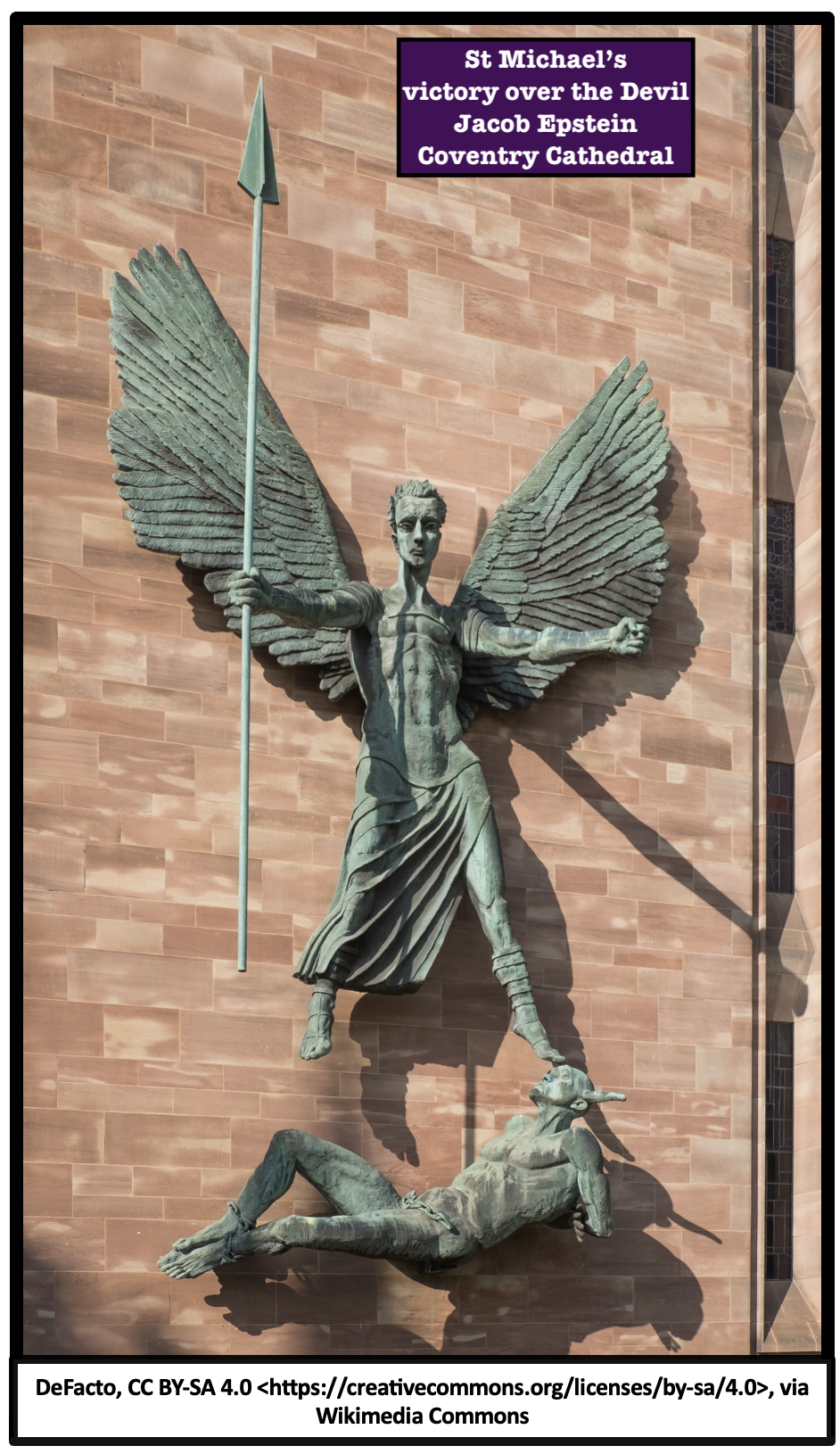
When Basil Spence’s famous post-war cathedral was built beside the bombed ruin of the old, the great Jewish sculptor Joseph Epstein was given the task of recreating the archangel Michael. Some questioned the choice of a Jew. The bishop, in the chair, quietly said ‘a Jew like Jesus’.
I had not realised that the Archangel is also present in Jewish and Muslim holy writ. Epstein’s vision was prophetic. The cathedral must stand for forgiveness, peace and reconciliation. How then could he represent the fighter for a restored world who had already exiled evil from heaven? His task was now to do the same on earth. Epstein’s archangel, spear in hand, as in most classic iconography, does not use the spear to finish the devil off. It points heavenward. A pleading devil lies, only lightly chained, pleading at the archangel’s feet. Epstein’s devil is not beyond redemption. This unique version of heaven and hell in a living relationship is why Coventry’s patron remains a symbol of a world that has not lost hope.
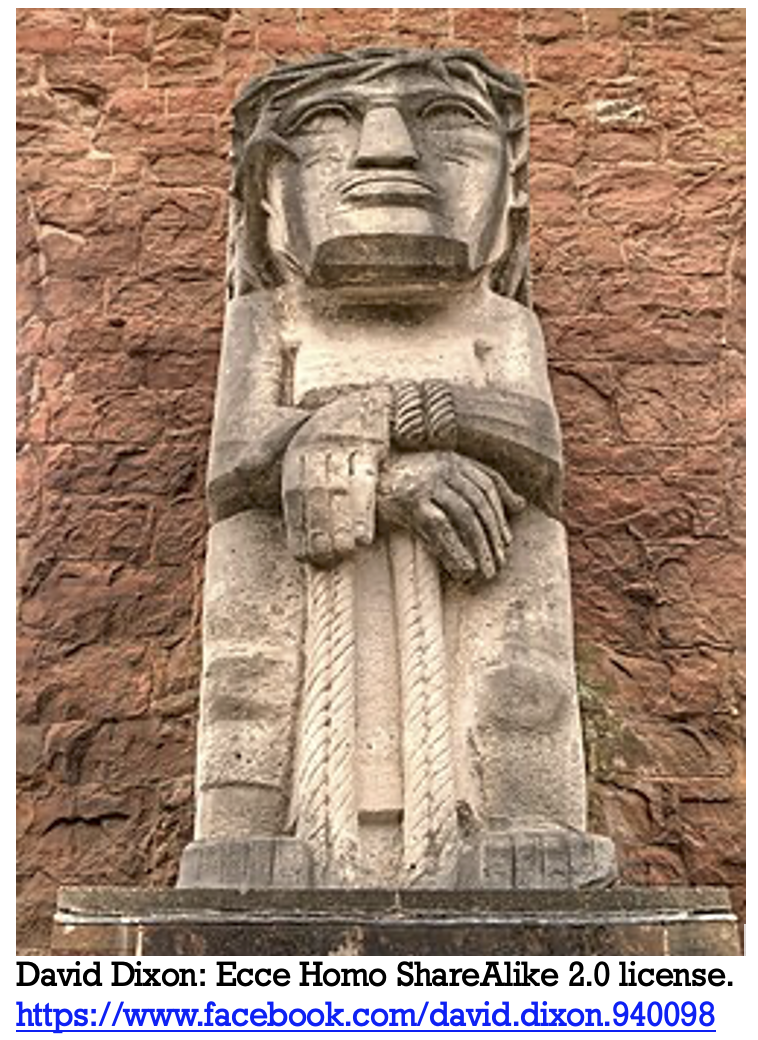
In the wartime ruins you will find Epstein’s greater work still: Jesus in a crown of thorns under interrogation by Pontius Pilate. Epstein considered this to be his greatest work. He kept it in his own garden. His widow knew where it should remain: in Coventry’s ruins, a symbol of defiant suffering, disliked by many.
Desmond Tutu, in his world of both suffering and hope, challenged me to help to end the bitter war between Gatsha Buthelezi’s Freedom Party and the African National Congress. Would the Zulu chief come out from isolation to join the new and free South Africa? The chief, a fellow Anglican, knew me well and trusted me, though we differed widely. Long patient hours in Ulundi ended well. The killing was over. If Michael was with me, so was the foreign minister of Nigeria, who hammered the last nails into that conflict’s coffin.
Colin Bennetts, on his retirement as bishop, faced me with a very different kind of challenge. Would I preach on the Feast of Christ the King at his farewell eucharist? The dean would almost certainly be unhappy with this choice of preacher. Between bishop and dean there was a theological divide, a liberal bishop and a dean who personified the world of Holy Trinity Brompton. Many in the established congregation considered the dean, kind as he was, to be a misfit. Might this sermon help to bridge the gap? I sweated mightily. Michael, will you come to my rescue?
In essence, the sermon addressed the tension between Jesus as Christ the King and Jesus as the Suffering Servant – yet the same Jesus. Against my normal practice, I wrote down every word. I only departed from the written text at my last sentence. It had come to me only moments before: ‘Do not forget, dear friends, that Michael, our archangel, flies with two wings, a left wing and a right wing.’
Had Michael dictated these words? I will never know. Another Paul, the editor of The Church Times, exceptionally decided to publish them. Did my sermon reconcile? I doubt it. Why did making peace, reconciling difference, mean so much to me? I had to go back to my childhood. A frightened little boy suffered when his warring parents, in a passionate love-hate relationship, fought. Sometimes, getting them to make peace worked. Sometimes.
Paul Oestreicher
Ascensiontide 2026